

Sustainable Futures with Alaska Seafood part two: Natalia Ribbe, founding director of Ladies of Restaurants
Sustainable Futures with Alaska Seafood part two: Natalia Ribbe, founding director of Ladies of Restaurants
For Alaska Seafood, sustainability doesn’t just relate to fish. It’s about creating a sustainable workforce, attracting new talent and promoting the industry as a great place to work. Over the next four months, Alaska Seafood will be unearthing the future stars of the hospitality industry. In part two, we meet founding director of Ladies of Restaurants, Natalia Ribbe
from The Caterer
Hampton Manor Review, Hampton In Arden (Oct 2018)
Hampton Manor Review, Hampton In Arden (Oct 2018)
An “area of special architectural or historic interest, the character or appearance of which it is desirable to preserve or enhance“. Since 1968 Hampton-In-Arden has been defined as one such Conservation Area. The church of St Mary and St Bartholomew dates from the 12th century with additions in 13th, 14th and 15th centuries. Its reputed to hold a tomb containing the heart of a Knight’s Templar who died on a crusade with Richard the Lionheart. The church was restored in the 19th century.

In 1086 the village appeared in the Doomsday Survey as Hantone but was also known as Ardene. Across the centuries the land of Hampton-In-Arden passed between the crown and many notables of royal court significance, particularly in Tudor times. George Fentham (17th Century) was perhaps the most famous non-royal benefactor to the village, the successful businessman was a true philanthropist leaving a trust to support developments and relieve hardship from the poorest in the community. Mr Fentham’s legacy lives on with an eponymous club, green and hall.

Sir Robert (left), Sir Frederick Peel (right)
During the early 19th century, Prime Minister and founder of the modern police force Sir Robert Peel, owned the estate which passed to his son Frederick in 1850. Sir Frederick Peel proved quite a visionary for Hampton-in-Arden, building and developing shops, housing and lodges. In 1855 he built Hampton Manor, a Grade II listed building, in the mirror image of Drayton Manor, his father’s house which was close by.
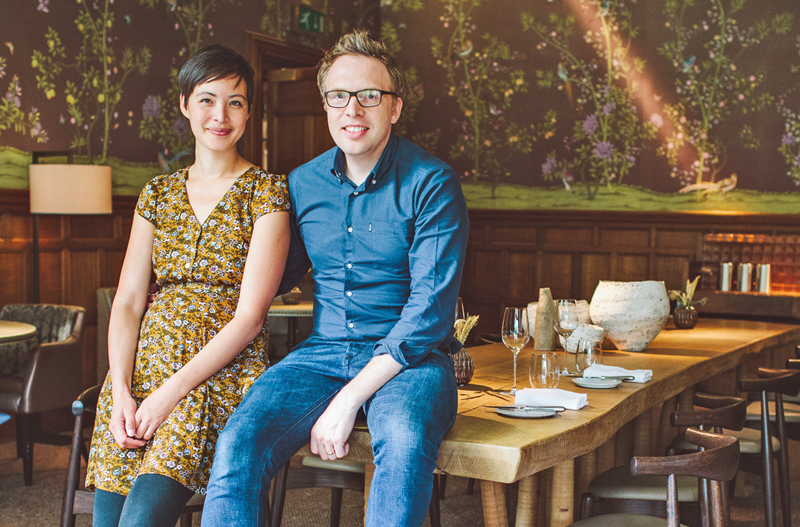
Fjona and James Hill
Relaunched in 2009 by James and Fjona Hill having been lovingly restored, converted and developed into a beautiful luxury restaurant with rooms, we were to discover that most of the guest rooms, Peel’s restaurant and The Parlour were further redecorated in 2015. Set in 45 acres, boasting 15 luxury appointed rooms and suites which seamlessly blend the richness of its history with the contemporary demands of the modern customer – a ‘home from home’ with state of the art twists – all this, yet respecting centuries of heritage that delves far beyond the garlanding of rooms with the names of the great and the good who have graced the estate over the centuries.

The visit started on the driveway! Providing by chance a stunning visual first impression as we entered through the gates and into the main entrance way, with the manor house straight ahead and to our left a Mclaren and Rolls Royce event discreetly hosted. Predominantly out of eye and earshot but just enough on view to admire. Stepping throught he entrance door, the meet and greet was exemplary. A lady ably assisted at the reception desk that sat just inside the house, tucked away to our right. As we turned more staff were waiting to help us to our room and tell the first of many ‘soul of the building stories’ in the wide and welcoming main reception. Indeed, throughout staff exhibited knowledge which was shared carefully and cleverly to optimize the pleasure of the guest.

Having been built at the height of the rewards to Britain of the industrial era, it is easy to see that Sir Frederick Peel celebrated those developments by having the likes of Industria proudly engraved on the staircase. Contrary to this, Peel appears to also have been an advocate of back to a memory of the past through literature, poetry and arts and crafts.
A champion of this movement was William Morris. Some might argue an early socialist, Morris had clear ideals about the quality of design of textiles in a way that industrialised production methods could not match, ironically this made his work very labour intensive and difficult to produce in bulk in a cost effective manner, which saw the effective end of the movement as being perhaps an expensive luxury, or arguably more a conscience of the wealthy.

Nevertheless, the works of William Morris are a thing of beauty and Hampton Manor continues Peel’s romance by paying tribute to Morris, not only in influence of theme, style and décor but more creative and modern ways such as the beautiful afternoon tea. The introductory ‘Red House’ cocktail was wonderfully conceived, constructed and presented.
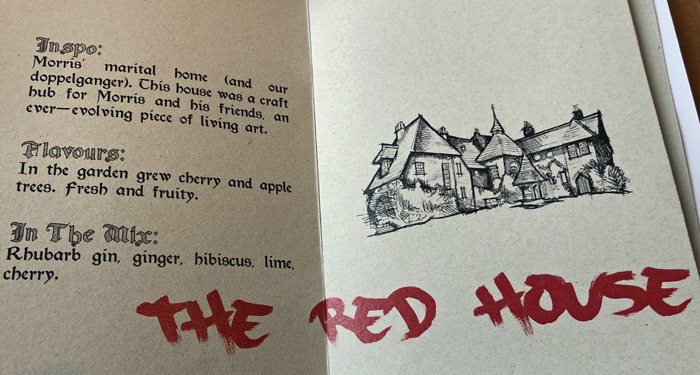
Indeed this proved our immediate appointment after arrival – Like industria versus Romanticism afternoon tea embodied the innovative versus the traditional, scones yes but finger sandwiches no!
The service started simultaneously for all guests with no staggered bookings. The event began with an informative presentation of the concept from the head waiter, alongside a chef demonstrating dry ice. The multi-staged process started in my case with the William Morris inspired drink with an English sparkling wine from Nyetimber described as an alternative option.
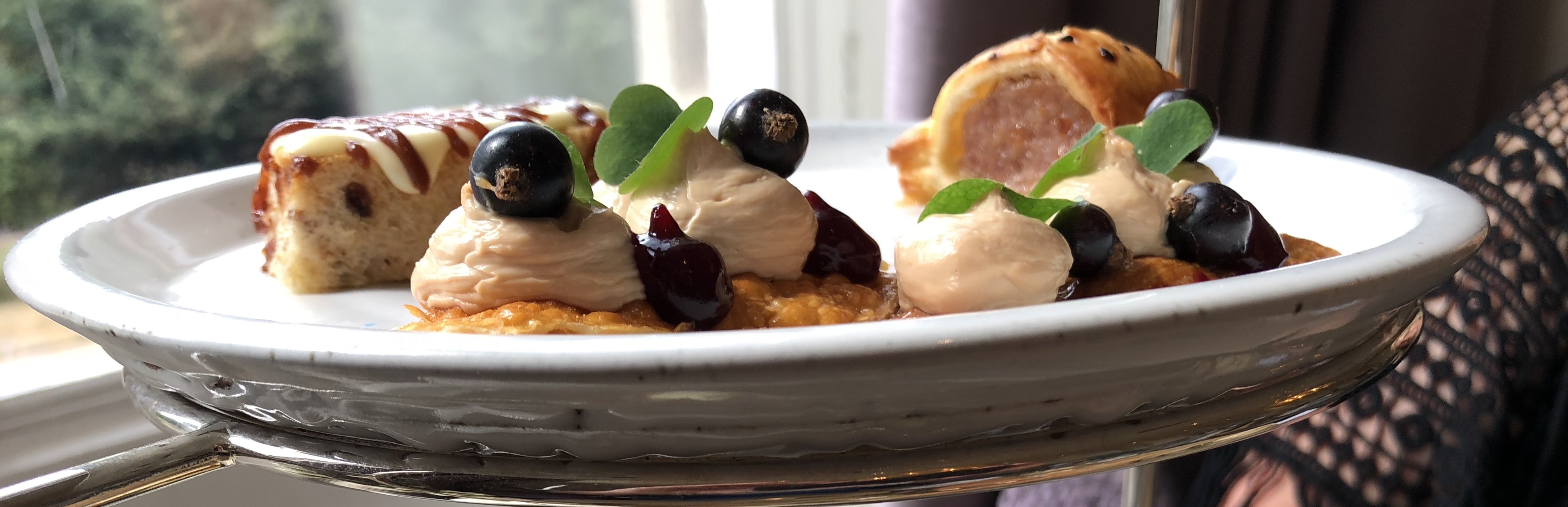
A succession of courses followed including reimagined versions of Peel’s dinner savouries in place of the obsolete finger sandwiches. Lalani rare loose leaf tea was presented in jars, alongside the more traditional scones with clotted cream. A further course, which instead of traditional pastries, found tasters of Peel’s desserts.
Overall the package was a huge hit and remains understandably popular with guests and local visitors.
A tour given by Gianrico (deputy GM) took in the Parlour – the room which hosts the afternoon tea, Peel’s restaurant dining room, tasting toom, a private courtyard, library, the walled garden plus a look at ‘The Cottage’.
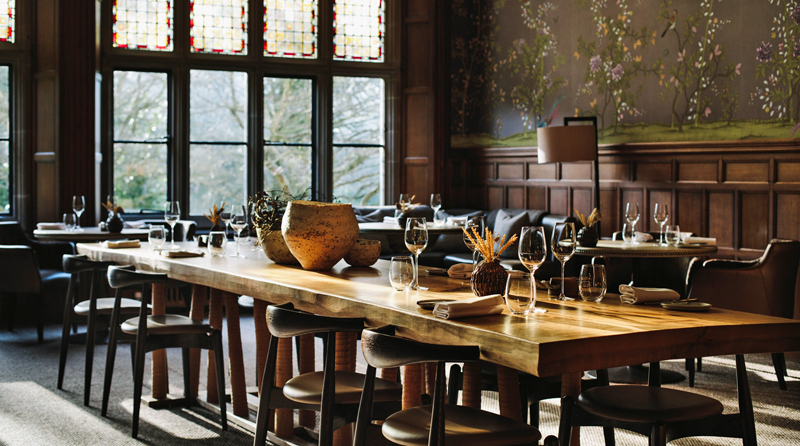
Upon entering Peel’s, the mixture of stained glass windows, oak paneling, William Morris wallpapers (the latter found in half the bedrooms and suites) make a bold statement. A kind of mid-Victorian mixture with many beautiful contemporary touches. Indeed, you may be forgiven for imagining the sights, smells and sounds of a Tudor feast at William Self’s hand-planed long oak table that above all else takes centre stage in the restaurant. The concept of gathering, socializing, sharing together, like friends away from home in a relaxed atmosphere, works very well indeed.
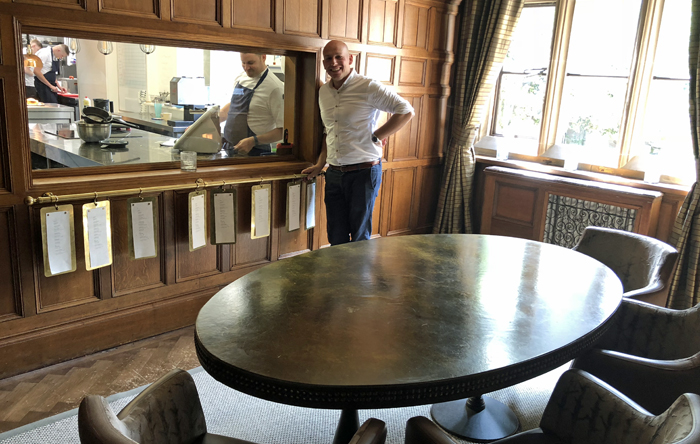
The kitchen table or tasting room, appears more a Victorian gentleman’s study, perhaps unashamedly only vaguely converted but undeniably fit for purpose as the juxtaposed collection of state of the art cuisine is delivered from Rob Palmer’s kitchen to the study table. The modern thinking organic, biodynamic, English championing, wine list is yet further evidence of the innovative meets traditional theme of our entire visit.
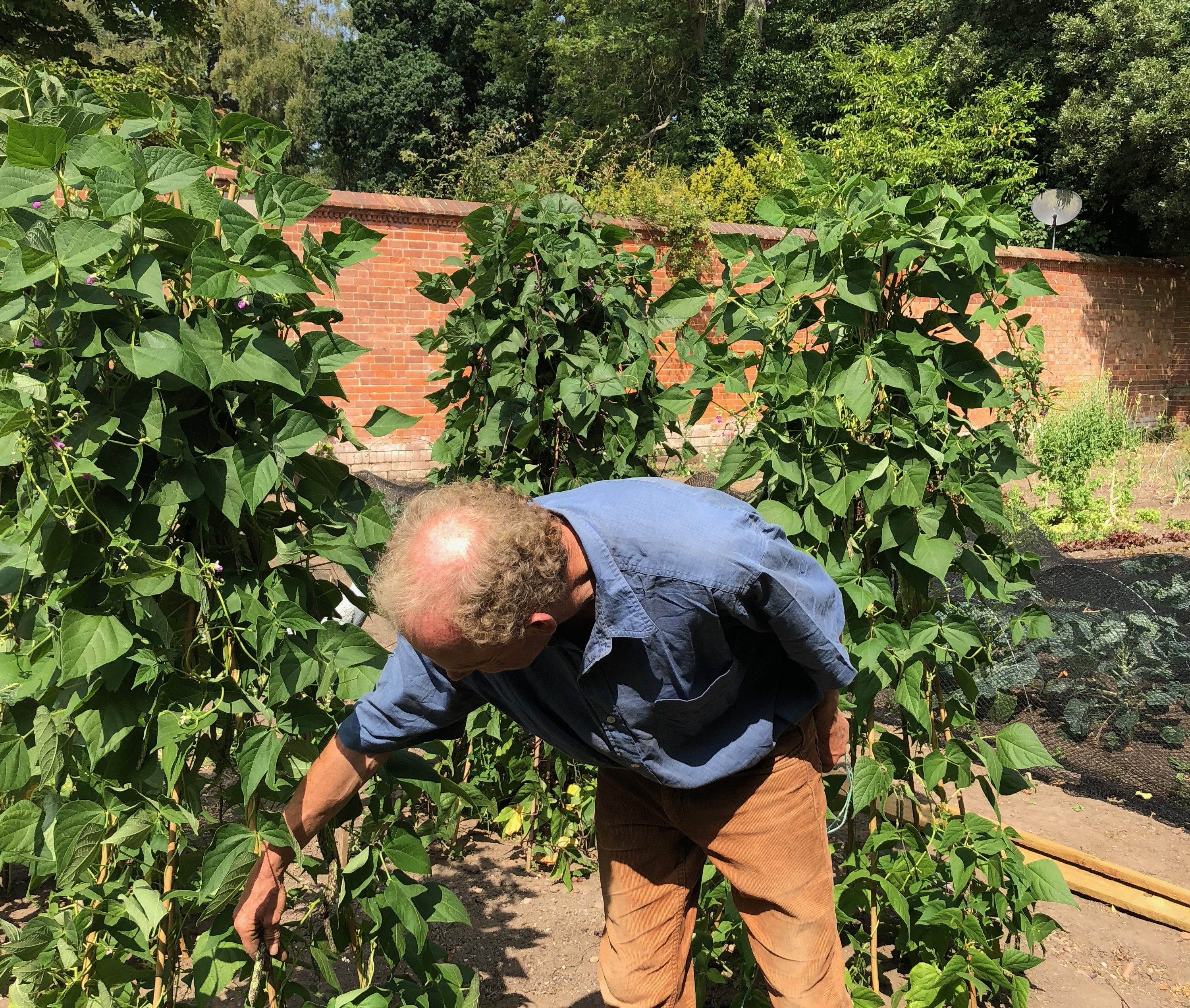
The walled garden has proven a rapidly developing success over the previous 12 months, delivering more and more consistent quality produce. As owner James Hill pointed out, the process of being connected to the seasons simply by seeing the vegetables growing in the walled garden is good for the souls of the chefs working in the kitchen of Michelin starred Peel’s restaurant. The garden provides more evidence of the garden (or field) to fork mentality that is gastronomically sweeping the nation.
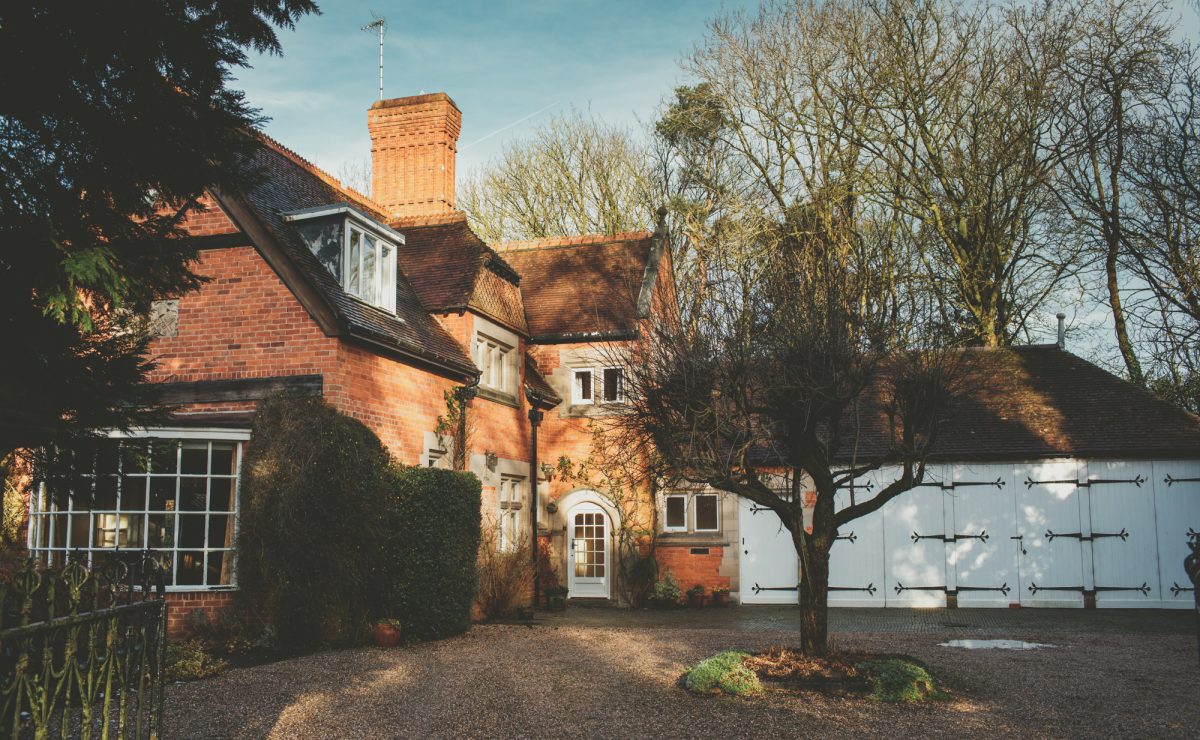
Just beyond the walled garden resides Manor Cottage which sleeps 4-6 (adults only), the separate property is marketed as a home away from home hideaway for those that wish the convenience of a holiday hire cottage but with all the facilities of a hotel, a Michelin starred restaurant, and ‘pamper rooms’ at the end of the drive.
This concluded our tour with the charming Gianrico, later that day we took a drive around the local villages before heading back to Resort World at the NEC, a 15 minute drive, to catch a movie. A staff member had explained that we could alternatively pop into Solihull, also a 15 minutes drive, if a movie was our activity of choice for the afternoon. This actually allowed a wedding event to take place back at Hampton Manor so in all the property was very busy.
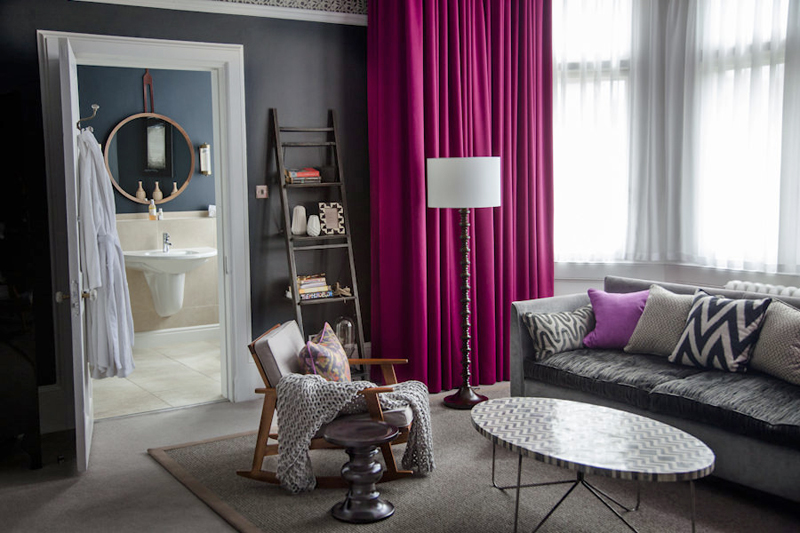
Robert Dudley was the name of our first feature room – An Earl of Leicester who bought Hampton Manor estate in 1572. The aforementioned George Fentham room provided our second night stay with amazing views out of the large period sash windows to gardens situated at the back of the manor. Across the property the thought, effort and attention to detail provides a perfect feel, a far cry from any corporate homogeneity, the individually themed rooms are completely on point for the luxury demands of the modern market. Good sizes, high ceilings, and sumptuous fabrics. A large comfortable bed is supplemented by modern comforts of technology via TV, iPod dock and high performance Wifi along side the creature comforts of organic tea and cookies, or a pampering roll top bath or walk-in shower.
Over second morning breakfast we were joined by owner James Hill whose passion and vision, shared by his wife Fjona have driven Hampton Manor continuously forward in the delivery of the details that lead to perfection.
In terms of new approaches, James pointed out that head count had been allocated to customer relationship management for particular types of custom. Hampton Manor has appreciated both its undeniable quality in the product offering but crucially how this sits alongside its geographical opportunity: Situated close enough to Birmingham city centre, the NEC and the airport, the result is business potential from providing the right kind of relationship focus on high value clients. As one example, Peel’s does not officially open for lunch but for certain customers a club-like service may be offered to encourage such patronage.
from Fine Dining Guide
Revelations: Tommy Heaney, head chef, Heaney’s Cardiff
Revelations: Tommy Heaney, head chef, Heaney’s Cardiff
What do you normally have for breakfast?
Coffee
from The Caterer
Restaurant Review: Hampton Manor, Hampton-In-Arden (Oct 2018)
Restaurant Review: Hampton Manor, Hampton-In-Arden (Oct 2018)
This article is the fifth in a series designed not to provide ‘A N Other’ opinion about a chef’s output, to be lost in the now sea of increasing ‘noise’ about top end dining. This is something slightly different. In this article the chef will analyse each of their dishes sampled against the five criteria used by Michelin for awarding a Michelin star. How so? Discerning foodies will recall that at The Michelin Guide GB&I launch event for the 2018 Guides, a slide was briefly discussed by Michael Ellis (at the time WW Director of Michelin Guides), which for the first time highlighted the five criteria followed by inspectors in the awarding of Michelin Stars. Michael Ellis confirmed these under interview on that day, as a reminder he explained:-
“The first and most important criteria is the ingredients, all great cuisine starts with great product – the actual product itself is considered for freshness, quality, flavour and texture and so on. The second criteria is mastery of cooking technique. The third criteria is equilibrium and harmony in flavours; the plate must be in balance, so the sauce is not, for example, overpowering the flavour of the fish or that the seasoning of the dish is found to be exactly as it should be. The fourth criteria is regularity (or consistency) and this means starter, main and dessert are all of the appropriate standard and that each are also consistent over time. Finally, value for money is the fifth criteria.”
Rob Palmer honed his craft at Peel’s, so named after the former prime minister Sir Robert Peel, whose onetime estate in the picturesque village of Hampton-in-Arden now houses the luxury hotel Hampton Manor in which Peel’s restaurant resides. Today the infrastructure for guests is abundant with road and rail a short distance awaty. A short drive frpom the M42, west of Birmingham, finds this unlikely idyll.
Rob was originially sous chef to Martyn Pearn. After 4 years under Michel Bourdin and twelve years of Michelin stardom across La Reserve (Bordeaux) and Buckland Manor (Cotswolds) Martyn proved a great mentor in the grounding of classical technique. From September 2014, at the tender age of 27, the opportunity arose for Rob Palmer to take the reins and stamp his own personality and creativity on the developing kitchen at Hampton Manor.
Ably and astutely developed by stages in Michelin 2 star kitchens such as Andrew Fairlee and Nathan Outlaw, by the 2017 ‘guide season’ Rob had led Peel’s restaurant to a first Michelin star in the GB&I Guide, along with the award of 4 AA Rosettes and a Michelin Welcome and Service Award which justifiably recognised the wonderful front of house found across Hampton Manor.
Onto the food, the dishes to be analysed by Rob across the five criteria are langoustine, beef, eel and chocolate led plates.
Consistency and value for money will be considered separately before each dish is discussed in terms of the other three criteria. So consistency, each chef is given their own recipe book to include the house dishes and to work on creative input to the team. The rule is that a recipe can be documented only after the chef has twice made that recipe successfully – twice is to ensure the difference between understanding something in theory and delivering it in practice. So typically I will provide my book and taste the dishes to check that each chef can produce the dishes to the correct consistent standard. During service I will taste dishes before they reach the customer or if I am not available the sous chef will taste the dish.
We will train people thoroughly which is a natural insurance of consistency, anyone who comes in shadows a section for a period of time until they are comfortable then they will run a section. We don’t really deal with commis chefs in the kitchen as the nature of the size and make-up of the brigade is such that each chef is effectively running a section.
In terms of creation or evolution of dishes, not everything has to come through Rob, it is a collective effort involving tasting and refining, before agreeing whether changes or new dishes make it to the customer via the menu. Naturally as dishes evolve the taste make-up of the whole dish will change so in addition to taste checks during any given service, over time (Rob believes every couple of weeks) the dishes are collectively re-checked and tasted to ensure that they continue to taste exactly as intended and no deviation has happened (by accident) over the course of say twenty services.
This is very different from a chef unilaterally deciding (typically in a very large kitchen environment) to do something differently during service outside of the house recipe for a dish, the nature of the Peel’s kitchen is close knit and the value add of each chef clearly visible from front to back of the kitchen.
When asked if Rob felt he was a scientific or instinctive chef, he felt that instinct was critical to being successful at the top end of the industry in that all ingredients are unique, so simply applying the science of weighing things out and cooking for a set period of time will take a chef so far but it is an art as well as a science and to master the art of being a chef means (in many respects) having instinctive creativity in the kitchen.
We keep up with seasons and pay focus and inspiration to the concept of an English walled garden, the garden at Hampton Manor is in its first year but this is developing into a stunning resource. While we do use a few different techniques and Asian influences in the dishes produced, the vegetables and garnishes have a clear English focus.
In terms of value for money, we do have a kitchen GP, but the hotel as a whole may meet in the middle, between say, large functions and the Peel’s top end restaurant kitchen. We put on a seven course menu for £95 and the customer will get a pre-dessert, snacks, amuses (as traditional ‘extras’ on a top end restaurant menu) but and in addition Wagyu Beef or Langoustine may feature in dishes: How many top end independent restaurants are required to charge a supplement for these sort of luxuries? The nature of the way the hotel works allows us to put on these wonderful premium ingredients for the customer.
Beef comes with a certain masculine comfort and accessibility factor, the kitchen experimented a couple of years ago with taking beef off the menu but brought it back by popular demand. We decided that rather than offer a kind of cliché like ‘fillet of beef’ (which has been done so often), we would instead offer rare and premium breeds such as Longhorn and Wagyu. While these breeds have limited access, they remain the best choices for kind of sheer quality and flavour that turns customers in regulars.
For the last couple of months we have been offering a special Thursday evening menu called ‘blind five.’ Five courses for £45 where two or three will be from the menu and two dishes which be produced specifically as a surprise for this menu. The evening has been fully booked since it was introduced as customers like the idea of trying something different and creative form the kitchen. This is also a premise of giving a dinner price point that brings people into a Michelin dining environment, perhaps for the first time and encouraging them to return for the full seven course experience.
The Scottish Langoustines are from Keltic Seafare, which we get in every week and are beautiful products. Nothing is wasted, the shells help make the sauce with a little ginger for some heat added to the bisque, the dish is served with a garden led leek terrine. The langoustines have a delicate flavour so to cook and season it naturally brings out the best of the product. We consciously don’t over manipulate the ingredients which can lead to overwhelming the natural balance and harmony of a dish. The philosophy is to try and stick to no more than three flavours on a plate. In terms of the langoustine dish we would want no more that the taste of langoustine, ginger and leek cooked properly and properly seasoned.
The three flavours of the Wagyu Beef dish are beef, carrot and black garlic. The carrots are from our own garden, an English black garlic, and via the butcher Aubrey Allen, we take Earl of Stonham farm thoroughbred Wagyu, which offers the best I’ve tried on the market. The beef is cooked sous vide at fifty-six degrees for six minutes and then quickly sear it in a pan to give it a little caramelisation, the glaze soy and sugar which works very well. The black garlic enhances the natural flavour of the beef and complements the dish exceptionally well.
The eel dish, we buy in the sustainable eel from the Devon eel company, already smoked as we don’t have the capacity to smoke them in house and the consistency and quality is superb. We fillet, skin and portion the eel before pan fried for a minute. The Kohlrabi is cooked sous vide and to order is diced and roasted in pan with miso butter. The Kohlrabi we also blitz with a 2% salt solution and ferment for a week in sous vide bags, . When ready we squeeze the juice out and infuse the eel bones into the juice. The result is loads of natural seasoning, smokey eel, salty sea herbs (Samphire or Sea Perslane) and an acidity from the juice that bring together the dish perfectly.
The Chocolate dish, and chocolate and vanilla go together perfectly. Each element of chocolate has different textures and intensity through different percentages of cocoa. There’s biscuit, shard, croustillant and a frozen mousse to go with sherry and vanilla ice cream. I’ve always felt that sherry has these chocolate notes that brings out the best in a chocolate dessert and I love this dish.
from Fine Dining Guide
Book review: ‘Feathers: The Game Larder’ by José Souto and Steve Lee
Book review: ‘Feathers: The Game Larder’ by José Souto and Steve Lee
José Souto and Steve Lee’s first book, Venison: The Game Larder, reinvigorated the traditional game market. The second in the trilogy from photographer Lee and chef Souto is the sharing of a passion for pheasant, duck, grouse, woodcock, goose, pigeon and other game birds.
from The Caterer
Recipe of the week: harissa-marinated and grilled partridge breast with orange couscous and pitta bread
Recipe of the week: harissa-marinated and grilled partridge breast with orange couscous and pitta bread
This is another great dish that I often do at home during the early part of the partridge season or using frozen birds from the previous season. The barbecue gives great flavours to the harissa as it cooks around the partridge without detracting from the game itself.
from The Caterer
Fortune favours the brave: Green & Fortune celebrates 10 years in business, from Kings Place startup to multi-stranded, multimillion-pound events company
Fortune favours the brave: Green & Fortune celebrates 10 years in business, from Kings Place startup to multi-stranded, multimillion-pound events company
Green & Fortune has grown from a fledgling startup to award-winning hospitality powerhouse over the past 10 years. Janie Manzoori-Stamford meets its founder John Nugent and director of operations Emma Williams
from The Caterer
Restaurant Review: Brasserie Prince by Alain Roux, Edinburgh (Oct 2019)
Restaurant Review: Brasserie Prince by Alain Roux, Edinburgh (Oct 2019)
Two empires meet at the stately Balmoral Hotel in the first co venture of the Roux and Forte dynasties. Alain Roux and his father Michel Roux O.B.E. of the three Michelin starred Waterside Inn, Bray, have joined forces with the Forte family, in particular Lydia Forte Rocco Forte Hotels’ Bar & Restaurant Development Manager and Olga Polizzi, Rocco Forte Hotel’ Director of Building and Design and sister of Sir Rocco Forte, to establish Brasserie Prince by Alain Roux. Its opening in June marked a watershed in the culinary progress of Edinburgh, being the first serious attempt to recreate an all-day dining venue inspired by Parisian models such as La Coupole and Le Train Bleu.

Whilst not as ornate as either of these French counterparts, Brasserie Prince with its marbled bar, large windows, brass fittings, banquette seating, antique mirrors and chandelier lighting bears all the hallmarks of classic brasserie fixtures and fittings. However, renowned restaurant designer Martin Brudnizki and Olga Polizzi, have integrated regional materials and colours into the design. Wood panelled walls, leather dining chairs and woollen cushion covers are used judiciously, whilst the blues and greens of the banquettes and armchairs in the library mirror the predominant colours of the Scottish landscape.

The green and white stripes of the outside awnings are repeated at intervals on the dining room ceiling, to break up its long length. Overall, a brighter, fresher feel is evident throughout.
The Auld Allaince meet in the food offering which features French bistro classics in a seasonally changing menu, employing the exceptional produce of Scotland and France. . Anticipating possibly a large French clientele, the menu is printed in English with French on the back. As Signature Chef, Alain Roux has created an extensive range of dishes, from seafood platters from the raw bar, sharing plates and light bites such as Croque Monsieur or hard boiled eggs mimosa with anchovy from the long bar, to three course meals in the main restaurant. Of particular interest are the “Grand-Mere Specials” of the Roux family, (all at £17.50) which vary throughout the week, from Tripes de Saint-Mande on Monday to Beouf Bourguignon on Sunday. Starters which include Grandpa Benoit Roux’s country pate with sourdough cost between £8.50 and £18.50. Main courses from the carte (£16.60 to £21.50) include bistro standards – albeit elevated to a higher level – such coq au vin with tagliatelle, steak tartare and Bouillabaisse. Desserts and cheese (£6 to £19) showcase favourites such as dark chocolate mousse and truffled Brie de Meraux
Prices can be challenging, but are also realistic given the quality of the produce, the skill in cooking, the comfort of the venue and central location in an iconic hotel, There are also bargains to be had at this level: a three course lunch special including the Grand Mere dish of the day, a starter and dessert from the carte and a glass of wine costs £32. Some dishes accommodate more modest budgets such as a hearty and filling Normandy soup at £9 – a popular choice on the day I visited – or Parisian gnocchi gratin at £9.50. It must also be remembered there is no requirement to order multiple courses; indeed a light lunch might consist of just one starter or small dish from the menu. Some might balk at the £3 charge for bread, but given its quality and quantity – greater than other establishments adopting the same practice at the similar or even higher prices – this is unjustified.

Maxime Walkowiak (above, left) from the Waterside Inn was seconded to oversee the transition from Hadrian’s to the Prince Brasserie Taking over as Director of the Dining Room is Hubert Laforge whose extensive experience of the exclusive world of five star hotels will enable him to reconcile the standards of luxurious accommodation with the more relaxed and informal ambience of the brasserie. Managing varying expectations will be a challenge.
The welcoming, knowledgeable and unobtrusive service by (above, centre) liveried front of house staff encourage an informal, relaxed ambience. A large brigade in the kitchen, serving breakfast, lunch and dinner is headed by Phillip Hickman from the Waterside Inn is able to cope with a maximum of over 200 covers. The acid test is always on a busy service where standards of cooking and service have to be maintained.
On a weekday visit during the Edinburgh Festival in August, I opted for half a dozen oysters from the carte (£12.50) followed by the lunch special.
A basket of sourdough and baguette, exemplary in their crisp crusts and firm crumb, arrived with unsalted butter and good olive oil. In addition there was a surprise amuse bouche of blinis with a guacamole dip.
Properly presented on a bed of ice with of lemon, red wine vinegar, shallot and pickled cucumber, the oysters with their creamy texture and briny aroma oozed the taste of the sea. A ritualistic dish, anointing the bivalves with the garnishes was a true gastronomic indulgence.

My choice of starter, given its rarity even on brasserie menus in France, was a foregone conclusion. Sauteed frogs’ legs Provencal exuded the heady garlic and parsley aroma of its persillade, of which there could have been a little more. A squeeze of lemon lifted these delicious morsels of finger food with sour dough used served to mop up the garlicy, buttery juices.

The Grand Mere Special of the day was lamb cutlets Germaine, with couscous, sorrel and mint sauce. Three generous partly French trimmed cutlets – a thin layer of fat was retained for flavour – were well seasoned if a slightly over done. Sorrel and mint added piquancy to the intense veal based sauce which the couscous helped to soak up. Accompanied by a glass of Cabernet Sauvignon included in the lunch promotion, this was an highly enjoyable dish.

For dessert, a little theatre was employed in the serving of a signature mille feuille from the trolley. Slicing the delicate buttery leaves of puff pastry sandwiching a well flavoured vanilla crème patissiere required a swift, deft approach, which was achieved.
Double expresso completed a memorable meal, one enhanced by the seamless service and congenial atmosphere. Visiting Brasserie Prince was a joy, as it is with all Roux restaurants. Fine Dining Guide will doubtless visit again on a future visit to the Scottish capital to sample different dishes from the embarrassment of riches on offer. We wish this new venture every success and will follow its progress with interest.
from Fine Dining Guide
Restaurant Review: Black Pig and Oyster, Edinburgh (Oct 2019)
Restaurant Review: Black Pig and Oyster, Edinburgh (Oct 2019)
Black Pig and Oyster is an exciting new addition to the Edinburgh dining scene. Specialising in Spanish cuisine, in particular dishes featuring the celebrated Iberian Black Pig, its tapas, street food and small sharing dishes alongside an a la carte menu make it ideal for both casual and special occasion dining.

Located on the Commercial Quay in Leith, and housed in what was originally a whiskey warehouse, it finally reopened in May this year after being flooded from the dentist above. The contemporary glass and steel frontage belies the warm, inviting décor of the interior. The original arched ceiling of red brick has been retained, giving it a cavernous feel, emphasised by stone pillars and up lighting. Parquet flooring, large, well-spaced tables and leather-backed chairs give a cool, sophisticated look to the dining room which can take up to 80 covers. At one end of the long room, adjacent to the wine cellar and with a clear view of the kitchen passe, is the chef’s table for to ten diners.

Clearly, considerable investment has gone into this venture which is very much a family run operation. Owners Bryan the chef and wife Michelle leading front of house, are assisted by son Jack on the pastry section and waitress daughter Yasmine. Overall, there are four in the kitchen and four front of house.
The ambitious menu is extensive, with a variety of tapas, street food and sharing options, popular at lunch time. Although the main carte contains vegetarian dishes, it emphasises the carnivorous and pescatarian elements. Five Iberian Black choices (£25-£28) include smoked and schnitzel versions. Five Butcher’s Finest dishes, (£18-£25), include wild mushroom and garlic chicken and crispy lamb with Picos blue. Shell and Fish ((£18-£25) include halibut and prawns and Iberian fish supper. Four desserts, (£6.95-£7.25) range from tempered chocolate brownie to Mojito panna cotta. An artisan cheese board is also offered at £8.95. Prices are fair given the quality and quantity of the raw materials, the skill in cooking and the comfort of the venue.
An agreeable wine list is prefaced by an interesting range of cocktails such as Madeiran Punch (Couvosier, lime and orange juice at £7.25) and De-Licious (Baileys, Frangelico, Crème de Menthe and fresh cream at £7.50)
A visit on a weekday evening during the Edinburgh Festival enabled me to same dishes from the carte. The ambience was relaxed and informal,

Loch Fyne oysters came in three preparations – natural with pickled shallot and sherry dressing, deep fried in a crisp and transparently thin tempura batter, and grilled with mahon cheese to reflect the Spanish theme of the restaurant. These gave satisfying contrasts of taste, texture and temperatures, a promising start to the meal.
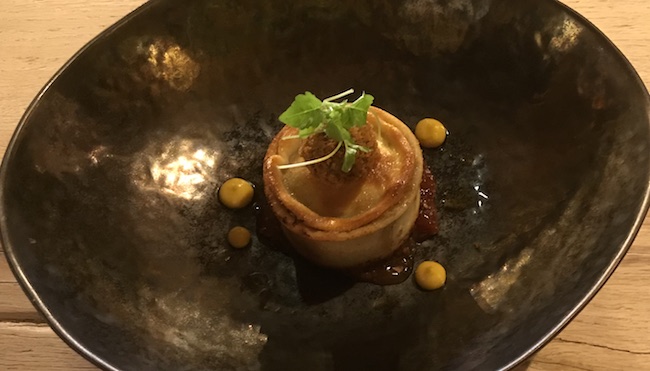
Next came a regional classic, Scotch pie, but not the flat, soggy unappetising specimens often encountered elsewhere. Here, the burnished water crust pastry was deliciously thin and crisp, encasing a well-seasoned mutton filling. Standing proud, it was topped with a flavoursome haggis bon-bon and paired with a smoked tomato chutney, which helped to cut the richness of the pie.

The main course was “Black Pig Surf and Turf” which showcased some of the best ingredients the restaurant has to offer. Two thick slices of Presa, the leanest cut of the acorn fed Iberian Blackpig from the lower back of the animal, had a steak like texture and rich, porcine taste, although any charred element was lacking. Equally enticing were the three giant grilled prawns, dressed with garlic butter which were accurately timed to enhance their succulent sweet flesh. The best part, however, was sucking the heads, where most of the flavour is! This combination would have been improved if the pork and prawns had been gently charred which would have boosted their flavour. Strangely, the lemon garnish was charred. Aioli and sauted potatoes completed this generous dish.

“The not so messy Eton mess” was the creation of son Jack, who has trained under a winning patissier of Crème de la Crème. A suitably light dessert to end a heavy meal, it featured toasted and dehydrated shards of meringue, cream, cubes of Chambord jelly, and fresh raspberries and strawberries with their coulis attractively arranged around the edge of a dark plate.
Overall, dinner at the Black Pig and Oyster was a most pleasant experience, enhanced by the unobtrusive and knowledgeable service overseen by manager Marian. It deserves to be successful, not just because the misfortunes forcing it to close temporarily, but, more importantly, because of the accomplished cooking based on first rate Scottish and Spanish produce. Fine Dining Guide will return to sample some of the smaller dishes and will follow its progress with interest.
from Fine Dining Guide
About

Recent Comments